
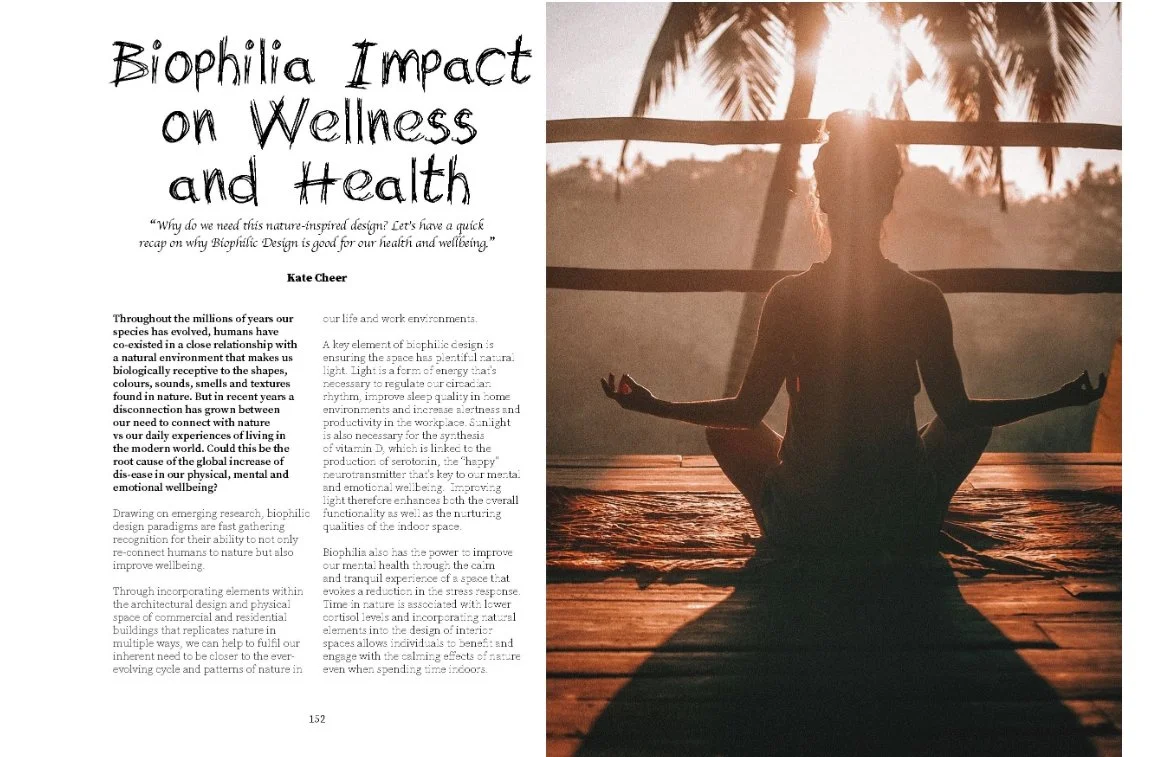
Biophilia Impact on Wellness and Health
Biophilia Impact on Wellness and Health Article published in the Journal for Biophilic Design Issue 12 - Nov 24
Throughout the millions of years our species has evolved, humans have co-existed in a close relationship with a natural environment that makes us biologically receptive to the shapes, colours, sounds, smells and textures found in nature. But in recent years a disconnection has grown between our need to connect with nature vs our daily experiences of living in the modern world. Could this be the root cause of the global increase of dis-ease in our physical, mental and emotional wellbeing?
Drawing on emerging research, biophilic design paradigms are fast gathering recognition for their ability to not only re-connect humans to nature but also improve wellbeing.
Through incorporating elements within the architectural design and physical space of commercial and residential buildings that replicates nature in multiple ways, we can help to fulfil our inherent need to be closer to the ever-evolving cycle and patterns of nature in our life and work environments.
A key element of biophilic design is ensuring the space has plentiful natural light. Light is a form of energy that’s necessary to regulate our circadian rhythm, improve sleep quality in home environments and increase alertness and productivity in the workplace. Sunlight is also necessary for the synthesis of vitamin D, which is linked to the production of serotonin, the “happy” neurotransmitter that’s key to our mental and emotional wellbeing. Improving light therefore enhances both the overall functionality as well as the nurturing qualities of the indoor space.
Biophilia also has the power to improve our mental health through the calm and tranquil experience of a space that evokes a reduction in the stress response. Time in nature is associated with lower cortisol levels and incorporating natural elements into the design of interior spaces allows individuals to benefit and engage with the calming effects of nature even when spending time indoors.
Studies have proven that improved cognitive function comes from the use of nature-inspired design elements that you can see, feel and touch. For example, natural materials that replicate the textures in nature, plants and greenery or visuals of green spaces, the use of water features and acoustics that create multi-sensory experiences within indoor environments.
Beyond its impact on mental health, biophilic design also provides positive physical health benefits. Especially in environments where individuals are healing from physical sickness and injury. A traditional Japanese practice of Shinrin-Yoku, also known as ‘forest bathing’, has been shown in studies to promote a healthier immune system. Through using untreated woods and replicating other elements of biophilia into interior and architectural design, it’s possible to provide an environment that results in faster recovery times with less medication thanks to the design principles contributing to the overall healing process.
Our breath, the very essence of life, can also be improved by considering air quality. By enhancing ventilation and increasing fresh air into the space, it’s possible to create a healthier indoor environment that creates healthier individuals. Poor ventilation increases CO2 levels, increases fatigue and reduces cognitive function. Excellent quality natural ventilation has been proven to reduce sickness and absenteeism in workplaces by 35% and helps reduce transmission of airborne infections and viruses. As well as boosting productivity by up to 18%. Making it a positive design decision for all.
As a Holistic Wellness Coach and former Interior Designer, I’m excited for this synthesis of wellness and interiors through biophilic design concepts. For the health and wellbeing of future generations rests on the mindful decisions we make today in creating healthier buildings for tomorrow.
Article published in the Journal of Biophilic Design Issue 12 - Nov 24

The Path Back to Balance
The Path Back to Balance. How energy, nature and movement return what stress takes away.
How Energy, Nature and Movement Restore What Stress Takes Away
There's a particular kind of tiredness that comes from living disconnected. Not just from other people, but from your own body, your breath, the rhythm you were meant to move through the world with. It settles in quietly, often unnoticed at first. A persistent fatigue that sleep doesn't quite fix. A mind that won't settle. A sense that something fundamental has gone missing, though you can't quite name what.
This is what happens when energy becomes blocked, when the natural flow that sustains you gets interrupted by stress, overwork, and the constant pressure to keep going. Your body holds tension it was never meant to carry. Your nervous system stays switched on long past when it should have found rest. And somewhere along the way, you lose touch with the simple, intuitive knowing that used to guide you.
The way back isn't complicated. It just asks you to remember what you already know.
When Energy Stops Flowing
Energy, in its simplest form, is life force. It's what moves through you when you're well, creating vitality, clarity and ease. Traditional practices have understood this for thousands of years. Qi in Chinese medicine. Prana in yoga. The animating force that keeps you not just alive, but truly living.
When that energy flows freely, you feel it. Your thinking is clearer. Your body moves with less effort. You sleep properly. You recover from challenges more quickly. But when stress, tension or prolonged pressure create blocks in that flow, everything becomes harder.
Modern life is particularly good at creating these blocks. Long hours sitting in the same position. Shallow breathing that never quite reaches your belly. Nervous systems stuck in low-grade fight or flight, reacting to emails and notifications as though they were actual threats. The body wasn't designed for this. It responds by holding tension, restricting flow and eventually, by breaking down.
The symptoms show up as burnout, anxiety, persistent fatigue, poor sleep, brain fog, and a nagging sense of being overwhelmed. What’s actually happening underneath is simpler than it seems. Your energy has stopped moving the way it should.
Movement that Means Something
Not all movement is equal. You can exercise hard, push your body through intense workouts, and still feel disconnected. That's because the kind of movement that restores energy isn't about force or achievement. It's about awareness.
When you move with attention, when you connect each movement to your breath and stay present with the sensations in your body, something shifts. You're no longer just going through the motions. You're actively clearing stagnation, opening channels, allowing energy to flow again.
This is the foundation of practices like Qi Gong, Tai Chi, and mindful yoga that have influenced and shaped Star Alchemy’s ‘Energy Alchemy Movement’ classes. Slow, deliberate movements that wake up the body's intelligence. They teach you to feel where tension lives, where energy gets stuck, and how to gently encourage it to move through.
The pace matters. Slowing down enough to actually notice what's happening inside creates space for healing. Your body begins to remember what balance feels like.
Strength builds not from strain, but from alignment. And the nervous system, finally given permission to settle, starts to let go of patterns it's been holding for months or even years.
The Breath You've Been Missing
Most people have forgotten how to breathe properly. Not because they don't know how, but because stress has taught them to breathe shallowly, high in the chest, using only a fraction of their lung capacity. This kind of breathing keeps the nervous system activated. It signals to your body that something is wrong, even when nothing actually is.
Breath is the most direct tool you have for changing your state. Deep, slow breathing into the belly activates the parasympathetic nervous system, the part responsible for rest, repair and recovery. It tells your body it's safe. That it can let go. That healing is allowed to happen.
When you weave conscious breathwork into movement and energy practices, the effects multiply. Breath moves energy. It clears blockages. It grounds you back into your body when your mind has been running ahead for too long. And it does all of this in real time, creating immediate shifts you can actually feel.
This isn't abstract. After just a few minutes of intentional breathing, your heart rate slows. Your muscles release. Your thoughts quiet. The transformation is both simple and profound.
Nature as Medicine
There's a reason practices focused on reconnection often happen outdoors, or incorporate natural elements. Nature operates on rhythms that our bodies recognise instinctively. The rise and fall of breath mirrors the movement of waves. The cycles of day and night, seasons turning, growth and rest. These aren't metaphors. They're patterns your biology is designed to sync with.
When you practice near water, under trees, or with bare feet on earth, something shifts. The nervous system recalibrates. Studies on forest bathing and grounding show measurable changes in cortisol levels, inflammation markers, and heart rate variability. Your body recognises it's returned to an environment it understands.
Even when you can't be in nature, you can bring nature to you. Essential oils made from plants carry the chemical signatures of the natural world. Scent bypasses the thinking mind and speaks directly to the limbic system, the ancient part of your brain that governs emotion and memory.
Lavender calms. Eucalyptus clears. Frankincense grounds. These aren't just pleasant smells. They're tools that shift your state.
The intelligence of plants, the stability of earth, the flow of water, they all remind your system of what balance actually feels like. And that remembering is part of the healing.
Sound That Reaches Where Words Can't
Sound has been used as a healing tool across cultures for millennia. Drumming, chanting, singing bowls, the resonance of certain frequencies seems to reach parts of us that language and logic can't touch.
When you hear the steady rhythm of a drum or the pure tones of a hand pan during practice, your brainwaves begin to synchronise with those patterns. This is called entrainment. Your nervous system follows the lead of the sound, settling into slower, more coherent rhythms. Tension you didn't even know you were holding starts to release.
Sound also creates space. In the pause between one note and the next, the constant chatter of your thinking mind has nowhere to go. You drop into presence, into the body, into now. This is where healing actually happens, not in the thinking about it, but in the being with it.
Combined with movement, breath and energy work, sound becomes a pathway deeper into stillness. It holds you while you do the work of letting go.
The Alchemy of Combining Practices
Each of these elements, movement, breath, energy work, nature, scent, sound, they're powerful on their own. But when you weave them together, they create something greater than the sum of their parts.
Movement opens the channels. Breath moves the energy through. Scent shifts your state. Sound grounds you in the present. Energy work clears what’s stuck. And nature, whether you’re in it or bringing elements of it to you, reminds your system what harmony actually feels like.
This is alchemy in its truest sense. Taking ordinary actions, simple practices that anyone can do, and through their combination and intention, they are transformed. What was blocked begins to flow. What was tense begins to soften. What was fragmented starts to feel whole again.
You don’t need to understand how it works for it to work. You just need to show up, practice with consistency, and trust that your body remembers what to do when you give it the conditions it needs to be able to thrive, align and balance.
The Simplicity of It
One of the biggest barriers to people finding their way back to balance is the belief that it has to be complicated. That wellness requires expensive supplements, strict protocols, hours of daily practice, or some special knowledge only experts possess.
The truth is simpler. Your body already knows how to heal. It's been doing it your whole life, every time you've recovered from illness, injury, or stress. What it needs from you isn't perfection or endless effort. It needs consistency. Permission to slow down. And practices that support rather than deplete.
The practices that create lasting change aren't the ones that demand you become someone else. They're the ones that help you return to yourself. To the rhythm that feels natural rather than forced. To the awareness that tells you when to move and when to rest. To the trust that your body is working for you, not against you.
This is intuitive wellbeing. Not following someone else's rules, but learning to listen to what your own system is telling you and responding with practices that actually support it.
What Reconnection Looks Like
When energy begins to flow again, when you've cleared some of what was blocking you and built practices that sustain balance, you notice it in quiet ways at first.
You sleep better. Not perfectly, not every night, but more often than before. You wake with a sense of having actually rested. Your thinking becomes clearer. Decisions that used to feel overwhelming start to feel manageable. You notice you're breathing more deeply without having to remind yourself.
The constant undercurrent of anxiety begins to quiet. Not because you've fixed everything in your life, but because your nervous system has finally found a way to settle. You feel more present in your body, less like you're watching your life from somewhere just outside of it.
There’s a sense of coming home to yourself. Of being able to trust your instincts again. Of knowing, in a way that doesn’t need explanation, what you need and when you need it.
This is what harmony feels like. Not the absence of challenge or stress, but the presence of resilience. The capacity to meet what comes without being knocked completely off balance. To recover more quickly. To stay connected to what actually matters.
The Practice of Return
Reconnection isn't a destination you reach and stay at forever. It's a practice of return.
Life will continue to create stress, demands, and moments where you lose touch with your centre. That's not failure. That's being human.
What changes is how quickly you notice when you've drifted, and how readily you can find your way back. The tools you've learned, the awareness you've built, the practices that have proven they work, they become your anchors. Places you know you can return to when you need to restore balance.
Some days, practice looks like a full session of movement, breath and energy work.
Other days, it's five minutes of conscious breathing before you start your morning. Or a moment with your hands on your heart, feeling your own rhythm, reminding yourself you're here and you're alive.
The practice adapts to you. It meets you where you are. And over time, it becomes less something you do and more something you are. A way of moving through the world that honours your energy, respects your needs, and creates the conditions for you to thrive.
Where It Begins
If you're reading this and recognising yourself in the description of disconnection, of blocked energy and chronic stress, know that the way back exists. It's not hidden or complicated or reserved for people with more time or resources than you have.
It begins with one conscious breath. One moment of slowing down enough to actually feel what's happening in your body. One practice that reminds you what balance feels like.
From there, everything else follows. The energy that was stuck begins to move. The tension you've been carrying starts to release. The harmony you thought you'd lost reveals itself to have been there all along, just waiting for you to create the space to feel it again.
Your body knows the way. It's been walking this path since before you were born, guided by rhythms older than thought. All you have to do is remember. And then practice that remembering, again and again, until it becomes the most natural thing in the world.
Which, of course, it always was.
With love & blessings,
Kate
Founder of Star Alchemy & Energy Alchemy Movement
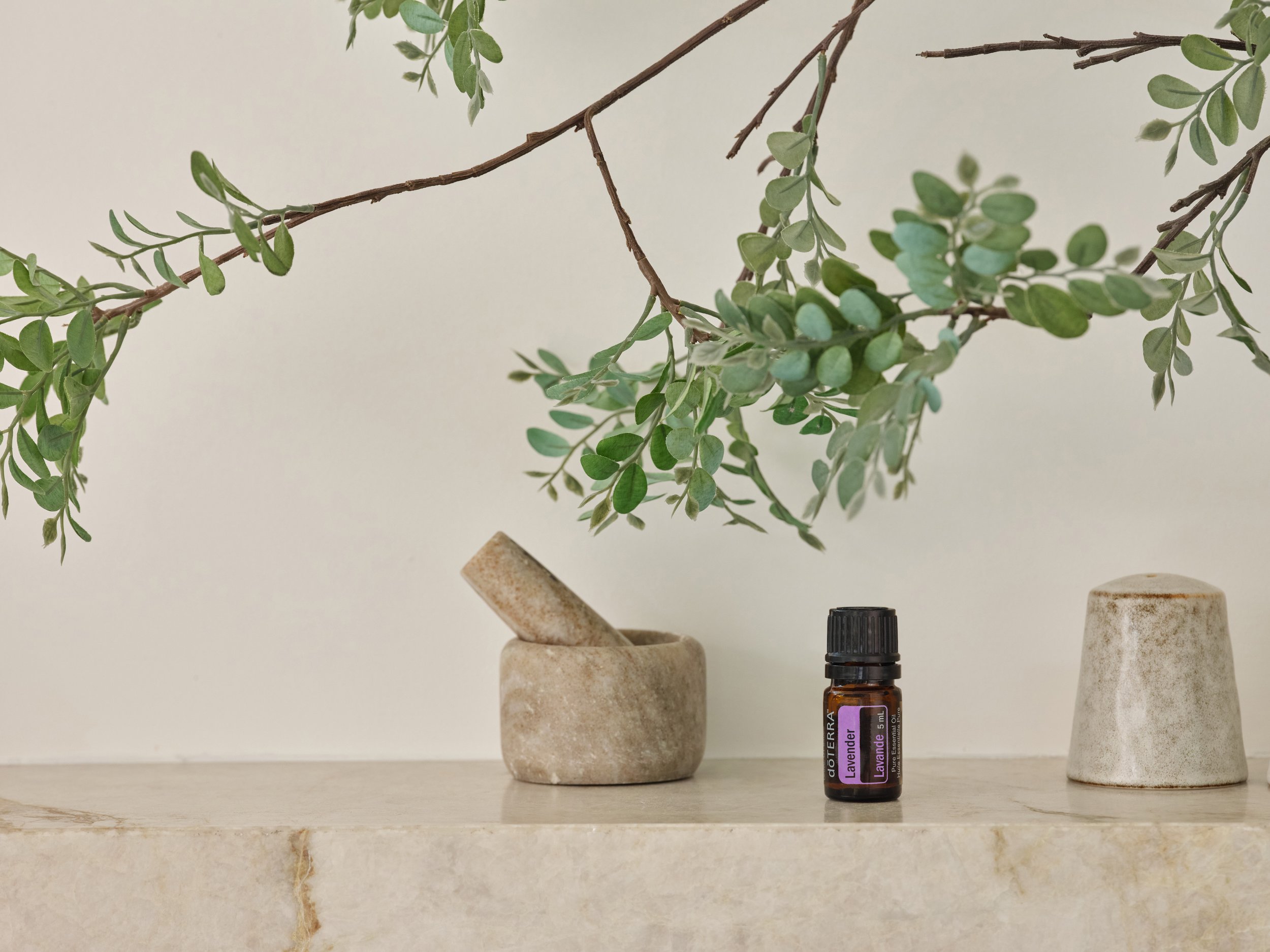
Bringing the Forest Home
Bringing the Forest Home. Essential oils and the science of nature connection.
Essential Oils and the Science of Nature Connection
In our increasingly indoor lives, we're discovering something our ancestors knew intuitively. We NEED nature. But what if you could capture the essence of a pine forest, a lavender field, or a eucalyptus grove and bring it into your home? With essential oils, that's exactly what you're doing, and the benefits go far beyond a pleasant scent.
The Science of Shinrin-Yoku
The Japanese practice of shinrin-yoku, or forest bathing, has taught us the remarkable relationship between humans and trees. When we walk through a forest, we're not just enjoying the scenery, we're bathing in an invisible sea of aromatic compounds called phytoncides. These are airborne chemicals that trees and plants release to protect themselves from germs and insects, and research shows they have profound effects on human health.
Studies have found that exposure to these forest aromatic compounds can lower blood pressure, reduce stress hormones like cortisol, boost immune function, and improve overall mood and wellbeing. The aromatic compounds from trees, including alpha-pinene from pine trees, limonene from citrus, and eucalyptol from eucalyptus, interact with our bodies in measurable, beneficial ways.
Bringing the Outdoors In
This is where essential oils become more than just a home fragrance, they become a bridge to nature. When you diffuse essential oils or use them in homemade cleaning sprays, you're releasing many of the same volatile aromatic compounds that you'd encounter on a forest trail or in a blooming meadow. That lavender oil in your diffuser contains the same linalool and linalyl acetate that the bees encounter when they visit lavender flowers. The pine oil in your cleaning spray carries the alpha-pinene from actual pine needles.
By incorporating essential oils into your daily life, you're creating what researchers call a "biophilic" environment.
The Biophilia Connection
Biophilia, a concept popularised by biologist E.O. Wilson, describes our innate human tendency to seek connections with nature and other forms of life. This isn't just poetry, it's biology. We evolved in natural settings, and our bodies and minds are wired to respond positively to elements of the natural world.
Modern biophilic design recognises this by incorporating natural elements into our built environments such as natural light, plants, water features, natural materials, and natural scents. When you diffuse rosemary while working or add tea tree oil to your bathroom cleaner, you're practicing biophilic design in its most accessible form. You're giving your nervous system gentle reminders that you're connected to the living world, even when you're indoors surrounded by walls and concrete.
Beyond Pleasant Aromas
The benefits of this nature connection through scent are real and measurable. Studies have shown that essential oils can help:
Support mental clarity and focus (rosemary, peppermint)
Promote relaxation and better sleep (lavender, chamomile)
Purify air and surfaces with natural antimicrobial properties (tea tree, eucalyptus, lemon)
Create positive emotional associations and reduce stress (frankincense, bergamot)
Strengthen our immune response, much like forest bathing (pine, fir, cypress)
When you choose natural essential oils over synthetic fragrances, you're choosing compounds that your body recognises from millennia of evolution. Your great-great-ancestors encountered these same molecules in nature, and your biology still responds to them today.
A Simple Practice
You don't need to choose between modern life and nature connection. A few drops of essential oil in a diffuser while you work from home, a homemade lemon and lavender cleaning spray for your kitchen counters, or eucalyptus oil in a warm bath…these simple acts aren't just cleaning or scenting your home. They're tiny acts of biophilia, bringing the chemistry of the living world into your daily environment and supporting your wellbeing in the process.
In a world where we spend an estimated 90% of our time indoors, essential oils offer us a daily dose of nature. One. Breath. At. A. Time.
They remind us that we're not separate from the natural world, but forever a part of it, even within our four walls.
Note: While essential oils offer many benefits, they should be used safely. Always dilute oils properly, use caution around pets and children, and choose high-quality, pure essential oils from reputable sources only.